
AI-Powered Linkage to Semiconductors! 2026 ACTFL Taiwan Pavilion Makes Grand Cross-Disciplinary Debut, Showcasing New Global Mandarin Education Momentum
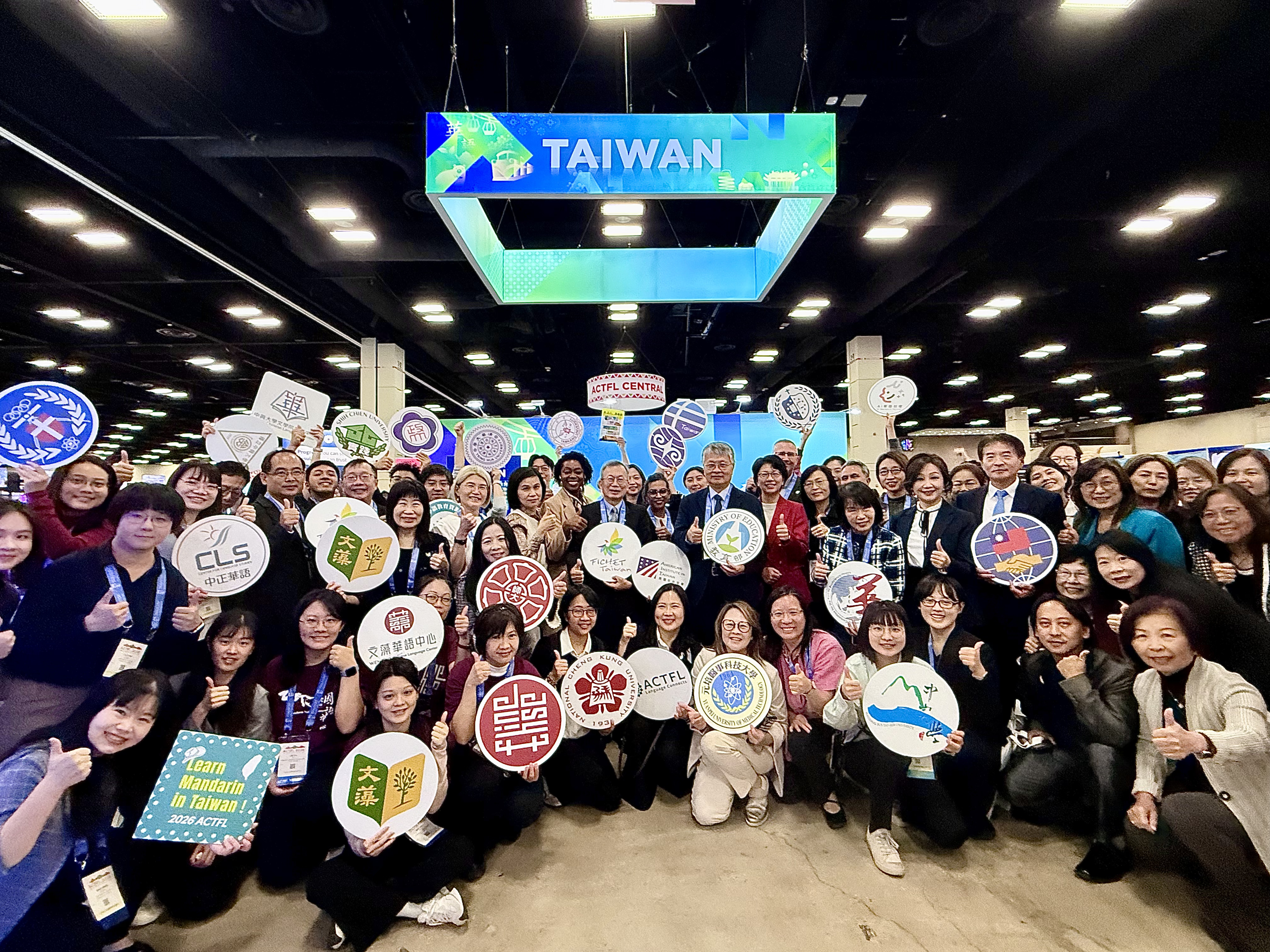
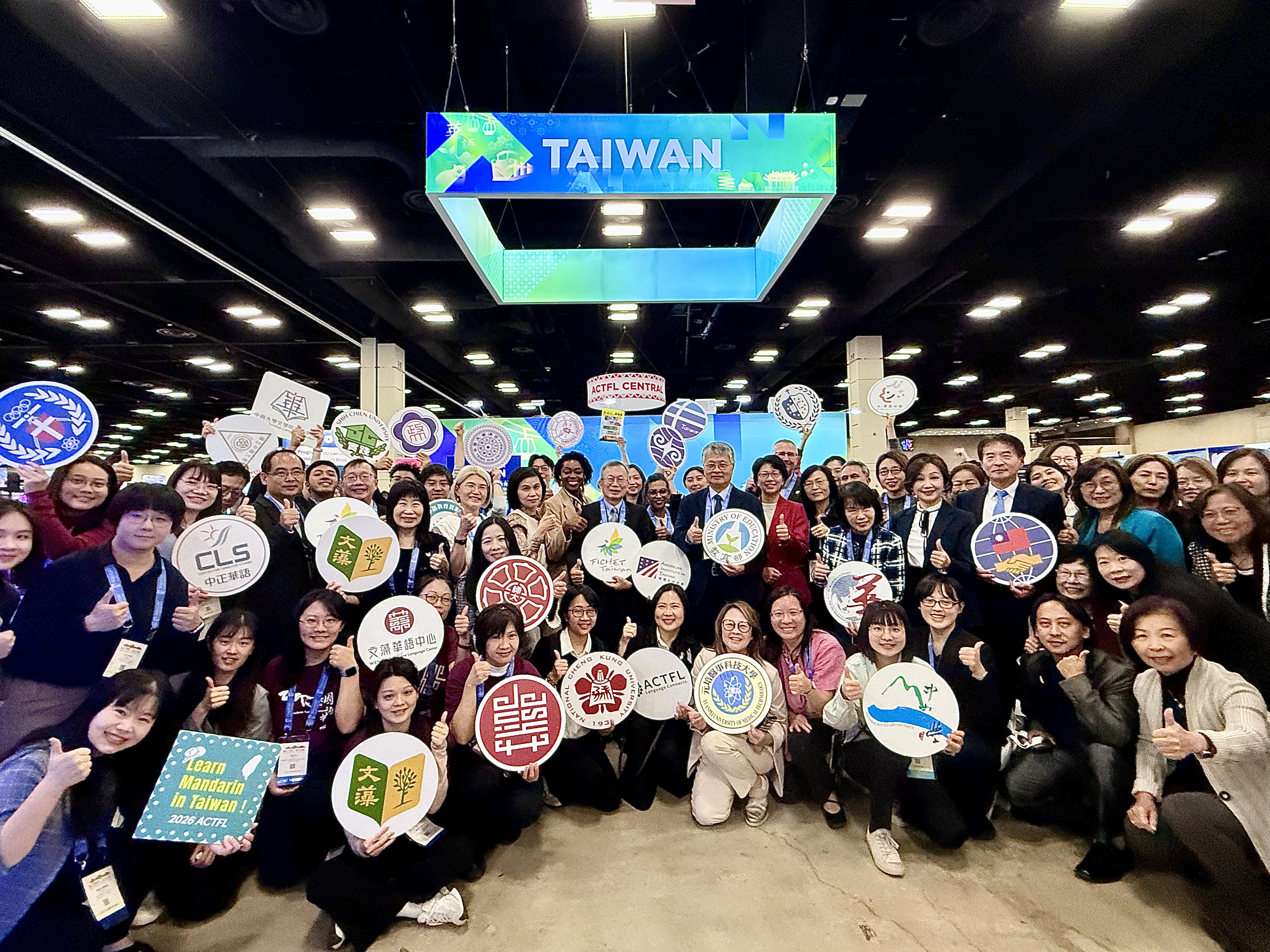
The premier annual event in U.S. language education—the 2026 American Council on the Teaching of Foreign Languages (ACTFL) Annual Convention—took place from November 20 to 22 in San Antonio, Texas. This year’s delegation was led by Political Deputy Minister of Education Liu Kuo-wei, alongside Li Tsai-yen, Chairperson of the Foundation for International Cooperation in Higher Education of Taiwan (FICHET), which coordinated and curated the exhibition. Together, they led 17 Taiwanese universities and colleges, three government-affiliated institutions (the Overseas Community Affairs Council, the Steering Committee for the Test of Proficiency-Huayu, and the National Palace Museum), and the Foundation for Scholarly Exchange (Fulbright Taiwan) to the United States. Totaling 21 participating organizations, the delegation comprehensively showcased Taiwan’s profound strengths and cross-disciplinary innovative momentum in Mandarin education.
With the rapid advancement of AI technology, language learning has embraced increasingly diverse and innovative possibilities. Political Deputy Minister of Education Liu Kuo-wei emphasized that Taiwan combines advanced semiconductor leadership, a free and democratic environment, and forward-looking AI educational applications. Debuting with a record-breaking lineup of exhibitors and cross-disciplinary tech themes, this year’s Taiwan Pavilion successfully deepened the foundation of Taiwan–U.S. educational cooperation while demonstrating to the international community the irreplaceable value of the “Learn Mandarin in Taiwan” initiative in connecting students with world-leading industries.
On the afternoon of the convention’s opening day (November 20), FICHET hosted the “Taiwan–U.S. Mandarin Education Exchange Forum” at the Grand Hyatt San Antonio River Walk, focusing on cultivating the future U.S. workforce and deepening bilateral partnerships. Opening remarks were delivered first by Deputy Minister of Education Liu Kuo-wei, followed by FICHET Chairperson Lee Tsai-yen and a representative from the National Council of State Supervisors for Languages (NCSSFL), before a keynote address by Gloria Dent, President of the Anne Arundel County Public Schools Board of Education in Maryland. The subsequent panel discussions were moderated respectively by FICHET Executive Director Lin Tzu-bin and Deputy Executive Director Chiu Shih-wen, bringing together representatives from Fulbright Taiwan, National Chung Cheng University, an AI Mandarin team, and Delta Electronics (Americas). Focusing on specialized semiconductor teaching materials, AI technological tools, and multinational corporate talent needs, academia and industry joined hands to strengthen Taiwan–U.S. educational and industrial alignment.
At the “Taiwan Night” networking banquet held that same evening, Deputy Minister of Education Liu Kuo-wei once again extended his appreciation to the Taiwan–U.S. educational community, followed by remarks from Yvonne Hsiao, Director-General of the Taipei Economic and Cultural Office in Houston, and FICHET Chairperson Lee Tsai-yen. The evening featured an opening vocal performance by Chen Chao-hsiang, President of the Austin Hakka Association in Texas, and concluded on a high note with closing remarks and reflections on delegation exchanges by ACTFL Executive Director Larry Paska.
In addition, a special workshop was held on the afternoon of November 21, during which FICHET Deputy Executive Director Chiu Shih-wen shared insights into Taiwan’s Mandarin Educational Resource Center , and Professor Tsai Tzong-han from the Department of Computer Science and Information Engineering at National Central University demonstrated practical applications of the “AI Mandarin Partner,” vividly illustrating the transformative impact of AI technology in frontline classrooms.
FICHET Chairperson Li Tsai-yen stated that with the support of the Ministry of Education and the U.S.–Taiwan Education Initiative, the foundation continues to serve as a transnational bridge, facilitating deeper inter-university partnerships between Taiwanese higher education institutions and nearly 100 leading U.S. universities while establishing a highly trusted system for promoting Mandarin education. Amid global tech supply chain restructuring, Mandarin education has entered a new era of “technological empowerment” and “professional integration.” FICHET will continue to integrate domestic higher education resources to make “Learn Mandarin in Taiwan” a vital springboard for American students to connect with cutting-edge industries and cross-cultural careers, expanding new horizons for Taiwan–U.S. cooperation.
Photos


Share this content